


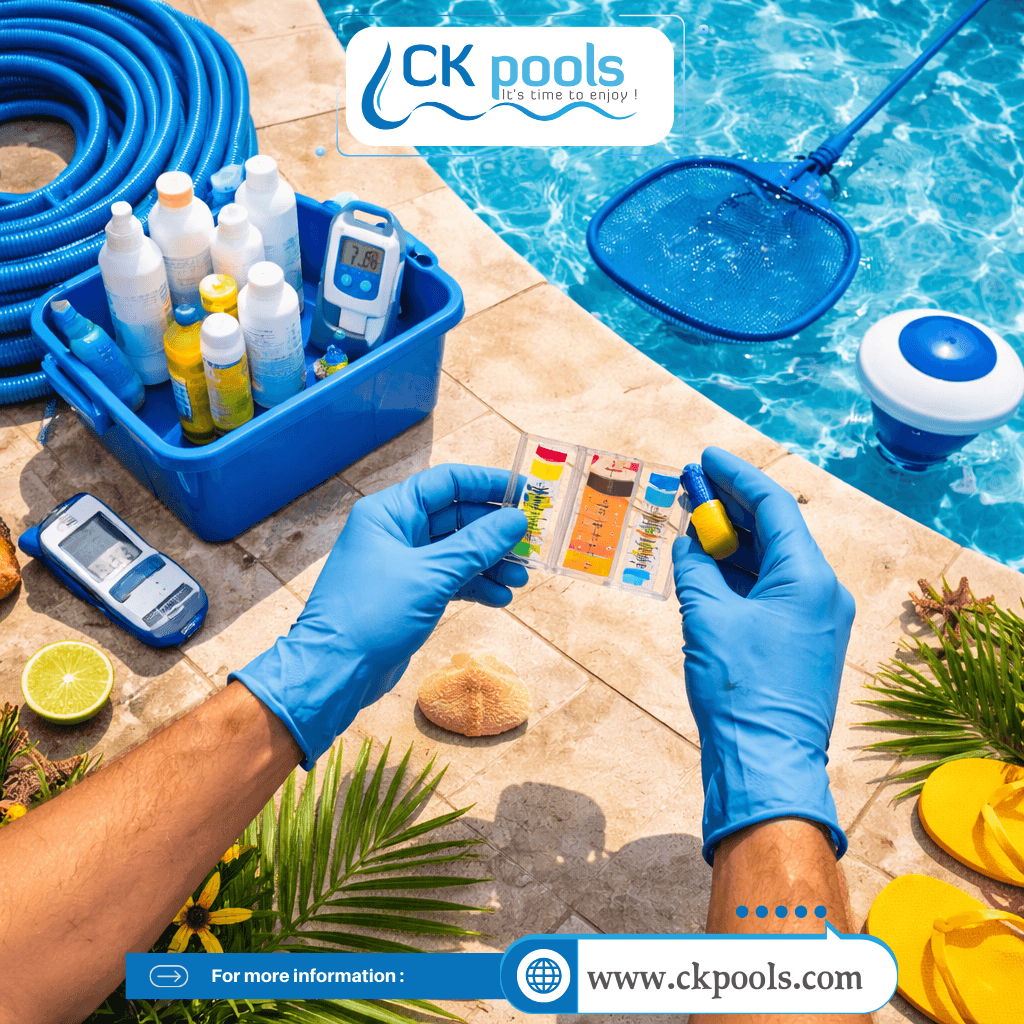
Top Pool Chemical Balancing Tips Explained
If your pool water looks clear, that does not always mean it is healthy.
Chemical balance is the quiet backbone of every well maintained pool. When it is right, the water feels great, equipment lasts longer, and problems stay away. When it is off, even slightly, issues start stacking up fast. Cloudy water, algae, itchy skin, damaged plaster, and failing equipment usually trace back to poor balance.
Let’s simplify this and walk through the chemical balancing tips every pool owner should understand.
Why pool chemical balance matters more than cleaning
You can skim, brush, and vacuum perfectly and still end up with problems if your water chemistry is off. Chemicals protect swimmers, surfaces, and equipment. Balanced water prevents corrosion, scaling, algae growth, and sanitizer loss. In hot climates like Houston, Dallas, San Antonio, and Corpus Christi, water chemistry shifts faster due to heat, sun exposure, and frequent pool use.
Start with chlorine, your primary sanitizer
Chlorine keeps bacteria, algae, and contaminants under control. Too little chlorine allows algae and bacteria to grow. Too much causes skin irritation and damages pool surfaces. Most residential pools should maintain a consistent chlorine level that is monitored weekly, and more often during heavy use or extreme heat.
Control pH to protect swimmers and equipment
pH affects everything. When pH is too low, water becomes acidic and corrosive. When pH is too high, chlorine becomes less effective and scaling appears on tile and equipment. Balanced pH keeps water comfortable, protects pool finishes, and allows chlorine to do its job properly.
Keep total alkalinity stable
Alkalinity acts as a buffer for pH. If alkalinity is too low, pH will swing wildly. If it is too high, pH becomes difficult to adjust. Stable alkalinity creates stable water, which reduces chemical use and equipment stress over time.
Do not ignore calcium hardness
Calcium protects plaster, tile, and pool surfaces. Low calcium causes etching and surface damage. High calcium leads to scale buildup on tile lines, heaters, and plumbing. Balanced calcium is especially important for pools with plaster finishes common across Texas homes.
Stabilizer helps chlorine last longer
Cyanuric acid, also known as stabilizer, protects chlorine from being burned off by sunlight. Without it, chlorine disappears quickly. With too much of it, chlorine becomes ineffective. Finding the right balance helps reduce chemical costs while maintaining clean water.
Test your water consistently, not occasionally
Testing once in a while is not enough. Weekly testing is the minimum for residential pools, and more frequent testing is recommended during summer. Reliable test kits or professional testing ensure you are adjusting the right chemical in the right amount.
Avoid overcorrecting chemical problems
One of the most common mistakes homeowners make is adding too much chemical too fast. Overcorrecting creates new problems and chemical imbalance cycles. Small, measured adjustments followed by retesting lead to better long term results.
Professional chemical balancing saves money long term
Many costly repairs start with chemical issues that were missed or mismanaged. Professional pool service ensures accurate testing, proper dosing, and early problem detection. In climates like Texas, professional chemical balancing often costs less than fixing damage caused by imbalance.
Let CK Pools handle the chemistry with confidence
Pool chemistry does not have to be complicated or stressful. At CK Pools, we professionally test, balance, and maintain pool water for homeowners across Houston, Dallas, San Antonio, and Corpus Christi. We protect your pool, your equipment, and your time.
Ready for perfectly balanced pool water without the guesswork?
Request your free pool service quote today
https://ckpools.com/get-a-quote/


Comments are closed