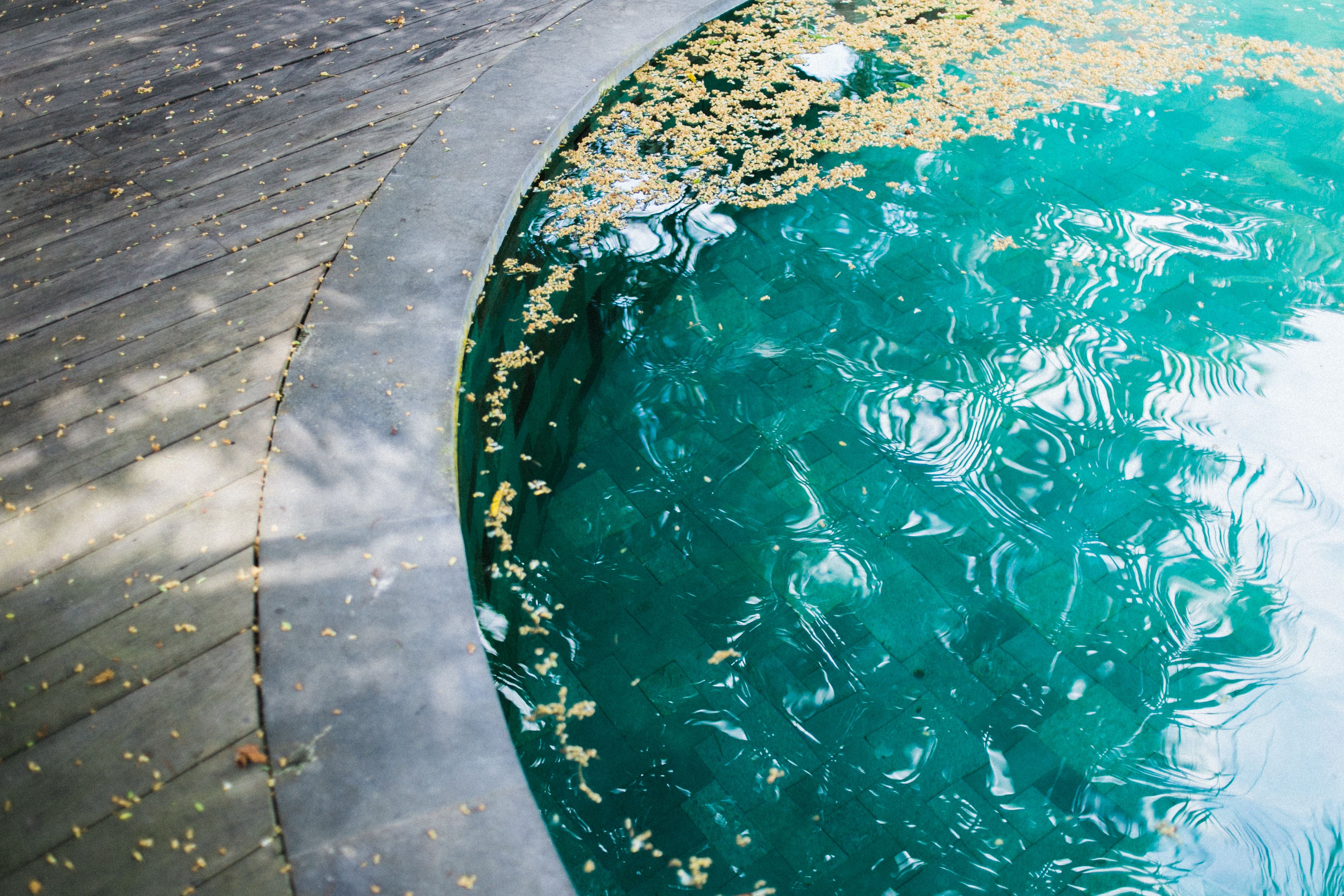
Pool stains are one of those problems that sneak up on Texas homeowners. The pool is running fine, the water is clear, everything seems normal — and then one day you notice a brownish patch on the steps, a dark streak along the wall, or a greenish discoloration on the floor that wasn't there last month. Pool stains don't always mean something is critically wrong with your water or your pool, but they do mean something — and identifying what that something is determines whether the fix takes ten minutes or several days.
The frustrating part of pool stain removal is that the wrong treatment not only fails to work — it can make certain types of stains worse. Treating a metal stain with shock, for example, can permanently set the stain deeper into the surface. Treating an organic stain with metal treatment products wastes time and chemicals without touching the actual problem. Getting pool stain removal right starts with correctly identifying what type of stain you're dealing with.
This guide covers every major type of pool stain found in Texas pools, how to identify each type accurately, how to remove them effectively, and what ongoing chemistry habits prevent pool stains from developing in the first place.
Before diving into stain types and treatments, it's worth understanding why Texas pools see more staining than pools in many other parts of the country.
Hard water. Texas tap water is mineral-heavy — high in calcium, magnesium, and other dissolved minerals that leave deposits on pool surfaces when chemistry isn't actively managed. Calcium scale staining is more common in Texas than in softer-water markets, and it develops faster when pool chemistry drifts out of range even briefly.
High iron and copper in source water. Many Texas water supplies — particularly in rural areas and certain Houston and San Antonio suburbs — have elevated iron and copper content. Metal staining from fill water is a significant and underappreciated cause of pool stains in Texas, particularly in pools that receive frequent top-offs during dry summers when evaporation is high.
Organic material. Texas landscapes produce enormous amounts of organic material — leaves, pollen, berries, seed pods, and other plant debris that falls into pools constantly. Organic material that sits on pool surfaces — particularly plaster — leaves organic pool stains that range from tan and brown to black and green depending on the source material and how long it's been in contact with the surface.
Extended UV exposure and algae. Texas pools face intense UV exposure for most of the year, and algae pressure is year-round. Algae staining — particularly from black algae that penetrates plaster surfaces — is more common in Texas pools than in states with shorter, milder swim seasons.
Pool chemistry fluctuations. The same conditions that make Texas pool chemistry challenging — intense heat, long seasons, heavy bather load, frequent rain events — also create the chemistry fluctuations that allow staining to develop. A pool that spends even brief periods with imbalanced chemistry is a pool that's developing pool stains more quickly than one with consistently managed water.
Pool stain identification is the critical first step that determines your treatment approach. Here's a practical guide to identifying the most common types of pool stains in Texas pools:
The vitamin C test for metal stains. Crush a vitamin C tablet (ascorbic acid) and rub it directly on the stain. If the stain lightens or disappears within 30 seconds, you have a metal pool stain — most likely iron or copper. This is the single most reliable field test for distinguishing metal stains from other types.
The chlorine test for organic stains. Apply a small amount of granular pool shock or trichlor directly to the stain and observe the reaction. If the stain fades or disappears quickly, it's an organic pool stain — algae, leaves, berries, or other plant material. If the stain doesn't respond to chlorine, it's either a metal stain or a mineral/scale deposit.
Visual identification by color. Color is a strong indicator of pool stain type:
Location as a diagnostic clue. Where pool stains appear provides additional diagnostic information:
Organic pool stains are the most common type in Texas pools — caused by leaves, berries, pollen, algae, and other plant material that comes in contact with pool surfaces and leaves a discolored residue.
What causes organic pool stains:
How organic pool stains look:Organic stains range from light tan and yellow-brown to dark brown and greenish-black depending on the source material and how long it's been in contact with the surface. They often follow the outline of whatever caused them — a leaf-shaped stain, a circular stain where a berry sat, a streak pattern from something dragged across the surface.
How to remove organic pool stains:
For fresh, mild organic pool stains, shocking the pool to a high chlorine level — 10+ ppm — and brushing the affected area thoroughly often removes or significantly lightens the stain. Allowing the pool to run at shock level with continuous filtration for 24–48 hours gives the treatment time to work on the stained surface.
For stubborn organic pool stains that don't respond to standard shocking:
Step 1 — Lower the pool's pH to the lower end of the acceptable range — 7.2 or just below — to maximize chlorine effectiveness before treatment. Acidic conditions help the chlorine penetrate the stained surface more effectively.
Step 2 — Brush the stained area vigorously with a pool brush to break up any surface layer protecting the stain.
Step 3 — Apply granular shock directly to the stain — place it on the spot and allow it to sit without disturbing for several minutes before brushing. The concentrated chlorine applied directly to the organic pool stain is more effective than dissolved chlorine in the water.
Step 4 — Run the filter continuously and retest after 24 hours. Repeat if staining persists.
For black algae staining specifically — one of the most stubborn organic pool stain types in Texas plaster pools — standard shock is insufficient. Use a steel wire brush to penetrate the protective biofilm cap, apply trichlor tablets directly to each colony, and shock the entire pool heavily. Repeat every 3–5 days for 2–4 weeks until no regrowth appears. Black algae that has deeply penetrated plaster may require professional treatment or resurfacing to fully resolve.
Metal pool stains are the second most common type in Texas and one of the most frequently misdiagnosed — many homeowners assume they have an algae problem when they're actually dealing with iron or copper staining from the water chemistry or source water.
What causes metal pool stains:
Iron staining — Iron in Texas fill water is one of the most common causes of metal pool stains. When iron enters the pool through fill water, it dissolves into the water chemistry. When chlorine is added — particularly shock — it oxidizes the dissolved iron, causing it to precipitate out of solution and deposit on the nearest surface as a reddish-brown pool stain. Shocking a pool with high dissolved iron content without first sequestering the metals is one of the fastest ways to create significant metal pool staining across large surface areas.
Iron can also enter the pool from corroding metal components — aging pipes, deteriorating fittings, or metal accessories left in the pool — and from well water used to fill pools in rural Texas areas.
Copper staining — Copper-based pool stains are typically blue-green or teal and often appear near return jets where the chemical-laden water contacts the surface most directly. Copper enters Texas pools through several pathways:
How to remove metal pool stains:
Metal pool stain removal requires a fundamentally different approach than organic stain treatment. Chlorine doesn't remove metal stains — it makes them worse by further oxidizing dissolved metals and setting them deeper into the surface.
Step 1 — Lower chlorine levels first. Before treating metal pool stains, allow chlorine to drop to 0–0.5 ppm or add a chlorine neutralizer to bring it down. Treating metal stains with chlorine present in the water significantly reduces treatment effectiveness.
Step 2 — Apply ascorbic acid (vitamin C). For iron-based metal pool stains, ascorbic acid treatment is the most effective approach. Add ascorbic acid powder — available at pool supply stores as a metal stain remover — at a rate of approximately 1 pound per 10,000 gallons. With the pump running and no chlorine in the water, broadcast the ascorbic acid across the pool. Within a few hours, iron stains should visibly lighten or disappear entirely as the ascorbic acid reduces the oxidized iron back into a dissolved form.
For spot treatment of localized metal pool stains, crush vitamin C tablets and rub them directly on the stain — the same diagnostic test used to identify the stain becomes the treatment for small affected areas.
Step 3 — Add a metal sequestrant. After the ascorbic acid treatment removes visible metal pool stains, the dissolved metals are back in the water — which means they'll stain again if not addressed. Add a quality metal sequestrant (chelating agent) to bind the dissolved metals and hold them in suspension where the filter can capture them or they can be backwashed out. Continue adding sequestrant weekly for several weeks after metal pool stain treatment.
Step 4 — Identify and address the metal source. Metal pool stain treatment that doesn't address the source of the metal will require retreatment repeatedly. Test your fill water for iron and copper levels. Evaluate whether any metal components in the pool system are corroding. If you've been using copper-based algaecide, switch to a non-copper alternative. Addressing the source is what makes metal pool stain treatment last.
Step 5 — Restore chlorine gradually. After sequestrant has been circulating for at least 24–48 hours, restore chlorine gradually — don't shock heavily right after metal pool stain treatment. Add small amounts of chlorine and allow the sequestrant to continue working. Monitor for any recurrence of staining as chlorine levels return to normal.
Calcium scale deposits — sometimes called calcium carbonate scaling — are technically mineral deposits rather than true pool stains, but they appear as white, gray, or chalky discoloration on pool surfaces, tile, and coping and are one of the most visible surface problems in Texas pools.
What causes calcium scale:
How calcium scale looks:White or grayish-white chalky deposits, often most visible at the waterline where evaporation concentrates minerals. Calcium scale can also appear as rough, crusty buildup on pool tile, coping, and steps, and as white flakes or particles in the water when scale breaks off from surfaces.
How to remove calcium scale:
For light calcium scale at the waterline — a pumice stone or scale-removing tile cleaner applied directly to the affected area is effective for deposits that haven't hardened significantly. Wet both the pumice stone and the surface before scrubbing to avoid scratching tile or plaster.
For heavier calcium scale on tile — a professional tile cleaning service using specialized calcium descaling chemicals and equipment is the most effective approach for significant calcium buildup on pool tile. Attempting to remove heavy calcium scale with improper tools risks damaging the tile surface.
For calcium scale on plaster surfaces — a diluted muriatic acid solution can dissolve calcium scale on plaster surfaces. This requires care — the acid is effective but must be applied correctly to avoid etching the surrounding plaster. Professional application is recommended for significant plaster calcium deposits.
For calcium flakes in the water — if calcium is flaking off surfaces and creating white particles in the pool water, a floc treatment followed by vacuuming to waste can remove the particles. But the underlying chemistry causing the scaling must be addressed to prevent immediate recurrence.
Chemistry correction for calcium scale prevention:
Waterline pool stains are one of the most visible and most common stain types in Texas pools — appearing as a ring of discoloration at the pool's waterline that accumulates over time from multiple sources simultaneously.
What causes waterline pool stains:
How to remove waterline pool stains:
Waterline pool stain removal depends on what's causing the stain — organic and oily deposits respond to enzyme-based cleaners and tile cleaners applied directly to the affected area. Calcium deposits at the waterline require calcium-specific treatments as described above. Metal-based waterline staining responds to the ascorbic acid and sequestrant approach.
A quality enzyme-based waterline cleaner applied regularly as part of the pool maintenance routine prevents waterline pool stains from building up significantly in the first place. Many pool professionals include waterline tile cleaning as a standard part of service visits for exactly this reason.
The most effective approach to pool stains is preventing them from developing rather than treating them after the fact. Here's what consistent pool stain prevention looks like for Texas pools:
Maintain balanced chemistry consistently. The vast majority of pool stains — organic, metal, and calcium alike — develop or worsen when chemistry is off. pH in the 7.2–7.6 range, alkalinity at 80–120 ppm, calcium hardness at 200–400 ppm, and consistent chlorine levels are the foundation of pool stain prevention.
Test fill water for metals. If you're in a Texas area with known iron or copper in the water supply, test your fill water and use a metal sequestrant proactively every time you add significant amounts of fill water. Adding sequestrant before shocking prevents the metal oxidation that turns dissolved iron into rust-colored pool stains.
Use a metal sequestrant regularly. Even without known metal issues, adding a quality sequestrant monthly is inexpensive insurance against metal pool stains — particularly in Texas markets where fill water mineral content is variable.
Remove organic debris promptly. Leaves, berries, and other organic material that sits on pool surfaces is creating staining from the first hours of contact. Regular skimming and vacuuming removes potential staining material before it has time to discolor pool surfaces.
Brush pool surfaces weekly. Regular brushing disrupts early-stage deposits — calcium, algae, and organic material — before they set into pool stains that require more aggressive treatment. Weekly brushing is one of the most cost-effective pool stain prevention habits available.
Monitor and manage calcium hardness. In Texas where fill water is hard, periodic partial pool drains to control calcium hardness are part of responsible pool maintenance. Calcium hardness above 400 ppm is where calcium scaling and related pool stains accelerate significantly. Keeping it in the 200–400 ppm range prevents the chemistry conditions that cause calcium-related staining.
Many pool stains can be addressed by informed homeowners using the treatments described above. But there are circumstances where professional pool stain treatment is the right call:
Large-area metal staining after shocking. If you've shocked a pool with high dissolved iron and created widespread rust-colored staining across large areas of the pool surface, professional treatment with properly dosed ascorbic acid and sequestrant is more effective and less likely to cause additional surface issues than DIY attempts.
Black algae staining that keeps returning. Black algae that's deeply rooted in plaster and continues regenerating despite repeated aggressive treatment has penetrated the surface beyond what chemical treatment alone can address. Professional assessment determines whether sustained treatment can eliminate it or whether resurfacing is the appropriate solution.
Significant calcium scale on tile. Heavy calcium buildup on waterline tile that hasn't responded to DIY descaling efforts needs professional tile cleaning equipment and chemicals to remove without damaging the tile.
Staining you can't identify. If the vitamin C test and chlorine test don't give you clear answers about what type of pool stain you have, professional water testing and surface evaluation can identify the specific chemistry issues causing the staining and prescribe the correct treatment.

Every CK Pools service visit includes waterline tile cleaning, surface evaluation, comprehensive water testing, and chemistry management that prevents the conditions most responsible for pool stain development. Detailed service reports after every visit keep you informed about your pool's surface condition and what's being done to protect it.
Dealing with pool stains you can't get rid of? Request your free quote at ckpools.com/contact and let CK Pools identify what's causing them and get your pool surfaces looking clean again.