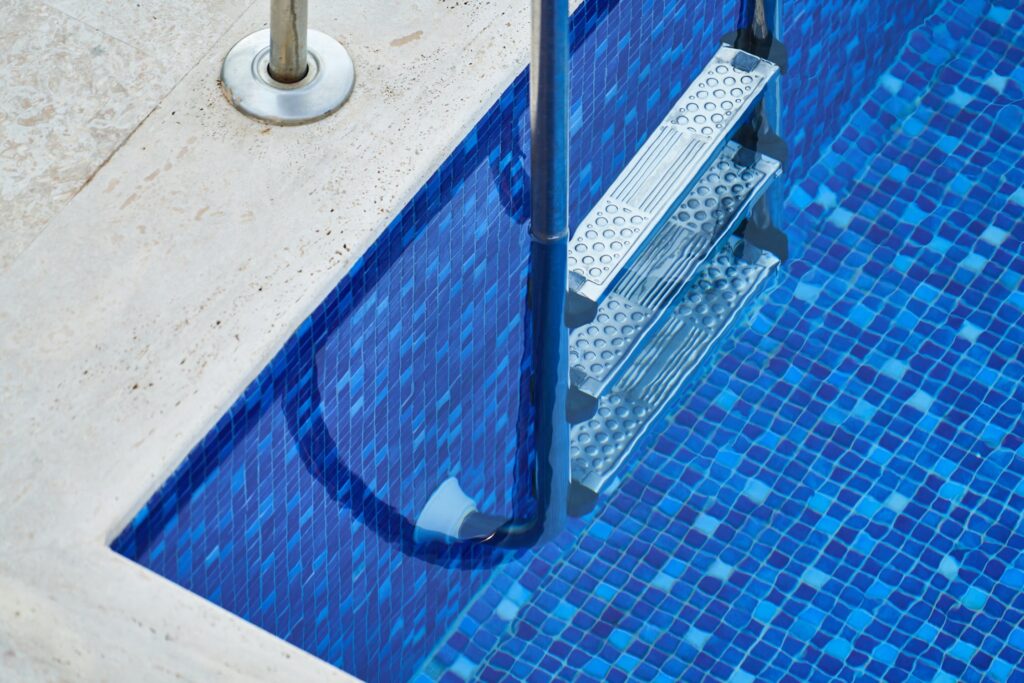
Pool tile is one of those decisions that most homeowners make once — and then live with for 15–20 years. Get it right and the tile frames your pool beautifully through every season, holds up against Texas hard water and intense UV, and still looks intentional a decade later. Get it wrong and you're looking at a chalky calcium band along the waterline within two years, cracked grout by year five, and a resurfacing project that could have been avoided with a better material choice at the start.
Texas is a demanding environment for pool tile. The combination of hard fill water that deposits calcium relentlessly, intense UV exposure that bleaches certain materials faster than others, significant temperature swings between seasons that stress grout and adhesive bonds, and the expansive clay soils in North Texas that move the pool structure itself — all of these factors affect how pool tile performs over its service life in ways that don't apply in milder climates.
This guide covers everything Texas homeowners need to know about pool tile — the options available, how each performs in Texas conditions specifically, what pool tile costs, and how to make a selection that looks great and holds up for the long term.
Pool tile in Texas lives a harder life than pool tile in most other states. Understanding the specific challenges Texas poses for pool tile helps frame why material and installation quality decisions matter here more than the showroom photo suggests.
Hard water calcium deposits. Texas tap water is mineral-heavy — high in calcium and magnesium that deposits on pool surfaces wherever evaporation concentrates minerals. The waterline tile band experiences this most aggressively — the constant evaporation at the waterline creates a zone of concentrated mineral deposition that builds calcium scale on the tile surface and infiltrates the grout lines over time. Pool tile materials that are denser, less porous, and more resistant to mineral infiltration perform significantly better in Texas hard water conditions than porous or softer materials.
Temperature cycling. Texas pools experience significant temperature swings across seasons — water temperatures ranging from near 50 degrees in winter cold snaps to 90+ degrees in summer, with deck and coping temperatures at the pool tile level reaching 120–150 degrees on summer afternoons. This thermal cycling causes expansion and contraction that stresses the bond between pool tile and the pool shell, between grout and tile edges, and between the adhesive mortar and the substrate. Pool tile installation that doesn't account for this movement — with adequate expansion joints and flexible adhesive systems — develops cracking and de-bonding earlier than properly installed tile.
UV exposure. Texas UV intensity bleaches and degrades certain pool tile glazes and colors faster than the manufacturer's specifications suggest — because those specifications are often based on less aggressive UV environments. Pool tile colors and materials selected without understanding their UV performance in Texas specifically may fade or shift visually within 3–5 years to a degree that disappoints homeowners who expected them to look as specified for longer.
Clay soil movement. In Dallas, Fort Worth, and surrounding North Texas markets, the expansive clay soils that stress pool shells also stress pool tile installations. A pool shell that moves slightly with soil moisture changes puts shear stress on tile bonding and grout that accelerates de-bonding and cracking in tile that wasn't installed with adequate flexibility to accommodate that movement.
Ceramic pool tile is the most common and most affordable pool tile category — fired clay tiles with a glaze on the face that provides color, pattern, and a degree of surface protection.
What ceramic pool tile is: Standard ceramic pool tile is manufactured from clay fired at high temperatures, with a glaze applied before the final firing that creates the tile's color and surface characteristics. Pool-rated ceramic tile is specifically formulated with glaze chemistry and clay body density appropriate for continuous water exposure — standard interior ceramic tile used in pool applications fails rapidly.
Performance in Texas conditions: Ceramic pool tile performs adequately in Texas conditions when the tile is genuinely pool-rated and properly installed. The primary limitation of ceramic pool tile in Texas is its porosity relative to porcelain — standard ceramic tile absorbs more water and minerals than denser porcelain, which means calcium infiltration into the tile body over time is more significant. In hard Texas water markets, ceramic pool tile requires more aggressive regular cleaning to prevent calcium scale from bonding into the tile surface.
The glaze on ceramic pool tile can craze — develop a network of fine surface cracks — when subjected to the thermal cycling Texas pools experience. Crazing doesn't immediately compromise the tile's waterproofing but it creates surface texture that traps calcium deposits and makes cleaning progressively more difficult.
Cost: Ceramic pool tile is the most affordable tile option — typically $2–$6 per square foot for the tile itself, with installation cost adding $8–$15 per square foot depending on the complexity of the installation and the area being tiled.
Best for: Budget-conscious applications where pool tile replacement every 10–15 years is acceptable, secondary tile areas like steps and benches where visual impact is lower than the waterline band, and pools in markets with softer water where calcium management is less aggressive.
Porcelain pool tile is the upgrade from ceramic that delivers meaningfully better performance in demanding environments — and Texas is exactly the demanding environment where the upgrade matters.
What makes porcelain different from ceramic: Porcelain is fired at higher temperatures than standard ceramic, using finer clay materials that result in a denser, less porous tile body. The water absorption rate of porcelain tile is significantly lower than ceramic — typically below 0.5% for true porcelain versus 3–7% for standard ceramic. This density is what makes porcelain pool tile perform better in Texas hard water conditions — less porosity means less mineral infiltration and less calcium bonding into the tile body over time.
Performance in Texas conditions: Porcelain pool tile handles Texas hard water significantly better than ceramic — the denser tile body resists calcium infiltration, and the harder surface is more resistant to the abrasive cleaning required to remove scale deposits. Porcelain tile also handles freeze-thaw cycling better than ceramic — relevant for North Texas pools where winter temperatures can drop below freezing.
Modern porcelain pool tile is available in an enormous range of sizes, colors, and surface textures — including large-format tiles that create a contemporary seamless appearance, wood-look textures, stone looks that mimic travertine or slate, and bold contemporary patterns that were previously achievable only with specialty tiles at premium prices.
Cost: Porcelain pool tile typically costs $4–$12 per square foot for the tile itself — a modest premium over comparable ceramic that delivers meaningfully better performance in Texas conditions. Installation costs are similar to ceramic.
Best for: Most Texas residential pools where waterline tile performance and longevity matter — the porcelain premium over ceramic is modest and the performance difference in Texas hard water conditions is significant enough to justify it in most applications.
Glass pool tile is the premium aesthetic option in pool tile — and it's become increasingly popular in Texas pool remodeling and new construction as the visual impact of glass tile has become more widely appreciated and the price premium has moderated.
What glass pool tile is: Glass pool tile is manufactured from recycled or purpose-made glass, typically in small mosaic sizes — 1x1 inch, 2x2 inch, or 1x2 inch formats — that are factory-mounted on mesh backing for efficient installation. The glass is typically cast or fused with color incorporated into the glass body rather than applied as a surface glaze — meaning the color extends through the full thickness of the tile rather than sitting only on the surface.
What makes glass pool tile visually distinctive: Glass tile reflects and transmits light in ways that ceramic and porcelain can't match. The iridescence of glass pool tile — the way it catches and scatters light differently from every angle, the way its color shifts between morning and afternoon light, the way it glows when backlit by pool lighting at night — is genuinely different from any other pool tile material. A waterline band of glass mosaic tile transforms the visual character of a pool in a way that's immediately apparent and consistently impressive.
Performance in Texas conditions: Glass pool tile is non-porous — essentially zero water absorption — which makes it the most resistant pool tile material to calcium infiltration in Texas hard water conditions. Calcium scale deposits on glass tile surface rather than penetrating the tile body, which makes regular cleaning more effective and less abrasive than cleaning porous tile.
The thermal expansion coefficient of glass is different from the cementitious mortar and pool shell materials it bonds to — meaning glass pool tile installation requires specific flexible adhesive systems and careful attention to expansion joint placement to accommodate the differential movement that Texas temperature cycling creates. Glass pool tile installed with standard ceramic tile adhesives and insufficient expansion accommodation is at higher risk of de-bonding from the thermal cycling Texas pools experience.
Cost: Glass pool tile is the most expensive tile category — typically $15–$50 per square foot for the tile itself depending on quality, brand, and design complexity. Installation cost is higher than ceramic or porcelain because of the precision required and the specific adhesive systems needed. A full waterline band of glass mosaic tile on a standard Texas pool represents a significant material and labor investment — but the visual result and the longevity in hard water conditions justify the premium for many Texas homeowners.
Best for: Premium pool tile applications where visual impact is the priority — waterline bands on pools with quality interior finishes, feature walls and water feature faces, accent bands and borders, and pools where the tile investment is part of a comprehensive renovation or new construction with a premium aesthetic vision.
Natural stone pool tile — travertine, slate, limestone, and similar materials — brings the authenticity and visual richness of natural material to pool tile applications. Used primarily for waterline bands, coping faces, and feature areas rather than full immersion surfaces, natural stone adds an organic quality to pool tile design that manufactured materials don't replicate.
Travertine pool tile: Travertine is the most commonly specified natural stone in Texas pool tile applications — and for good reason. Its warm, earthy color palette works naturally with Texas landscape materials, its textured surface provides visual interest that complements both traditional and transitional pool designs, and its thermal properties make it cooler to the touch in direct sun than many manufactured pool tile alternatives.
The primary consideration with travertine as pool tile is its porosity — natural travertine is porous and requires sealing to resist mineral infiltration in Texas hard water conditions. Properly sealed and maintained travertine pool tile performs well — inadequately sealed or sealed with the wrong products degrades faster than the material's natural beauty would suggest.
Slate pool tile: Slate brings a dramatically different aesthetic — dark, layered, natural texture that creates a striking contrast against bright pool water. Slate pool tile is dense and naturally low-porosity for a natural stone, making it relatively well-suited to pool applications. Its dark color makes calcium deposits more visible than on lighter tiles — a maintenance consideration in Texas hard water markets.
Cost: Natural stone pool tile varies widely — $8–$25 per square foot for the stone itself depending on material, origin, and thickness. Installation requires specific waterproof setting beds and sealants appropriate for the specific stone type — installation cost is typically $12–$20 per square foot.
Best for: Texas pools with natural or organic design aesthetics, pools where the tile is part of a broader landscape material palette that includes natural stone, and applications where the authenticity of natural material is valued over the uniformity of manufactured tile.
Color selection in pool tile affects both aesthetics and maintenance visibility — and in Texas conditions, both considerations matter.
Blue and teal tones: The most traditional pool tile colors — blue, teal, and turquoise — complement the blue pool water and create a clean, classic aquatic aesthetic. Darker blues and teals hide calcium deposits less effectively than lighter colors but create a more dramatic visual contrast with white or light pool water. In Texas where calcium management is ongoing, mid-range blues that don't show scale as dramatically as very dark tiles while still delivering visual depth are popular choices.
White and cream: White and cream pool tile creates a bright, clean aesthetic and makes the pool water appear lighter and more inviting. The visual limitation in Texas is that white and cream tiles show calcium deposits most dramatically — the white calcium scale on white tile is less visible than on dark tile, but the yellowing and discoloration of calcium buildup on white tile surfaces is noticeable and can make a clean pool look dingy if the tile isn't cleaned regularly.
Gray and charcoal: Contemporary gray and dark charcoal pool tiles have become increasingly popular in Texas pool renovation — the neutral tone works with modern and transitional design aesthetics, creates sophisticated contrast with pool water, and shows calcium scale less dramatically than very dark blues or blacks. For Texas pools where calcium management is an ongoing consideration, mid-tone grays offer a good balance of contemporary aesthetics and maintenance practicality.
Multicolor and mosaic patterns: Mosaic patterns — combining multiple colors in geometric or artistic arrangements — are one of the most distinctive pool tile applications available. They're particularly impactful at water features, on feature walls, or as accent bands that break up a single-color waterline band. The visual complexity of mosaic patterns also tends to minimize the appearance of calcium deposits relative to solid-color tiles.
The best pool tile selected for Texas conditions can still fail prematurely if the installation doesn't account for the specific demands of the Texas environment. Here's what quality pool tile installation looks like:
Proper substrate preparation. Pool tile bonds to the pool shell through a setting bed — typically a mixture of white Portland cement and sand or a specifically formulated tile adhesive. The substrate must be sound, properly prepared, and free of contamination before tile is set. Pool tile set over deteriorated, contaminated, or improperly prepared substrate de-bonds prematurely regardless of tile quality.
Flexible adhesive systems for glass tile. Glass pool tile specifically requires adhesive systems with adequate flexibility to accommodate the differential thermal movement between glass and the pool shell. Standard ceramic tile adhesives don't provide adequate flexibility for glass in Texas thermal cycling conditions — the right adhesive system is one of the most important installation decisions for glass pool tile longevity.
Expansion joint placement. Expansion joints — gaps in the tile installation filled with flexible sealant rather than rigid grout — allow the tile installation to accommodate thermal movement without cracking. Adequate expansion joint placement at regular intervals and at all transitions is essential for pool tile longevity in Texas temperature cycling conditions.
Waterproof grout selection. Pool tile grout must be formulated for continuous water immersion — standard grout used in shower or floor applications is not adequate for pool tile. Epoxy grout provides the best resistance to water infiltration and staining but requires skilled installation. Modified portland grout that's pool-rated is a viable alternative for most applications.
Installation by experienced pool tile professionals. Pool tile installation is a specialized skill — the combination of water exposure requirements, thermal movement accommodation, adhesive system selection, and the specific demands of curved pool surfaces requires experience that general tile installers often don't have. CK Pools' pool tile installation teams have specific pool tile experience across every tile type and application — the difference between a tile installation that lasts 20 years and one that begins failing at year 5 is almost entirely in the installation quality.

With over 37 years of pool tile installation experience across every Texas market — navigating hard water conditions in San Antonio and Austin, clay soil movement in Dallas, and the broad range of aesthetic preferences across Houston's diverse pool market — CK Pools delivers pool tile results that hold up and look great for the long term.
Ready to upgrade your pool tile or replace what's failing? Request your free pool tile consultation at ckpools.com/contact and let CK Pools help you choose the right tile for your Texas pool.