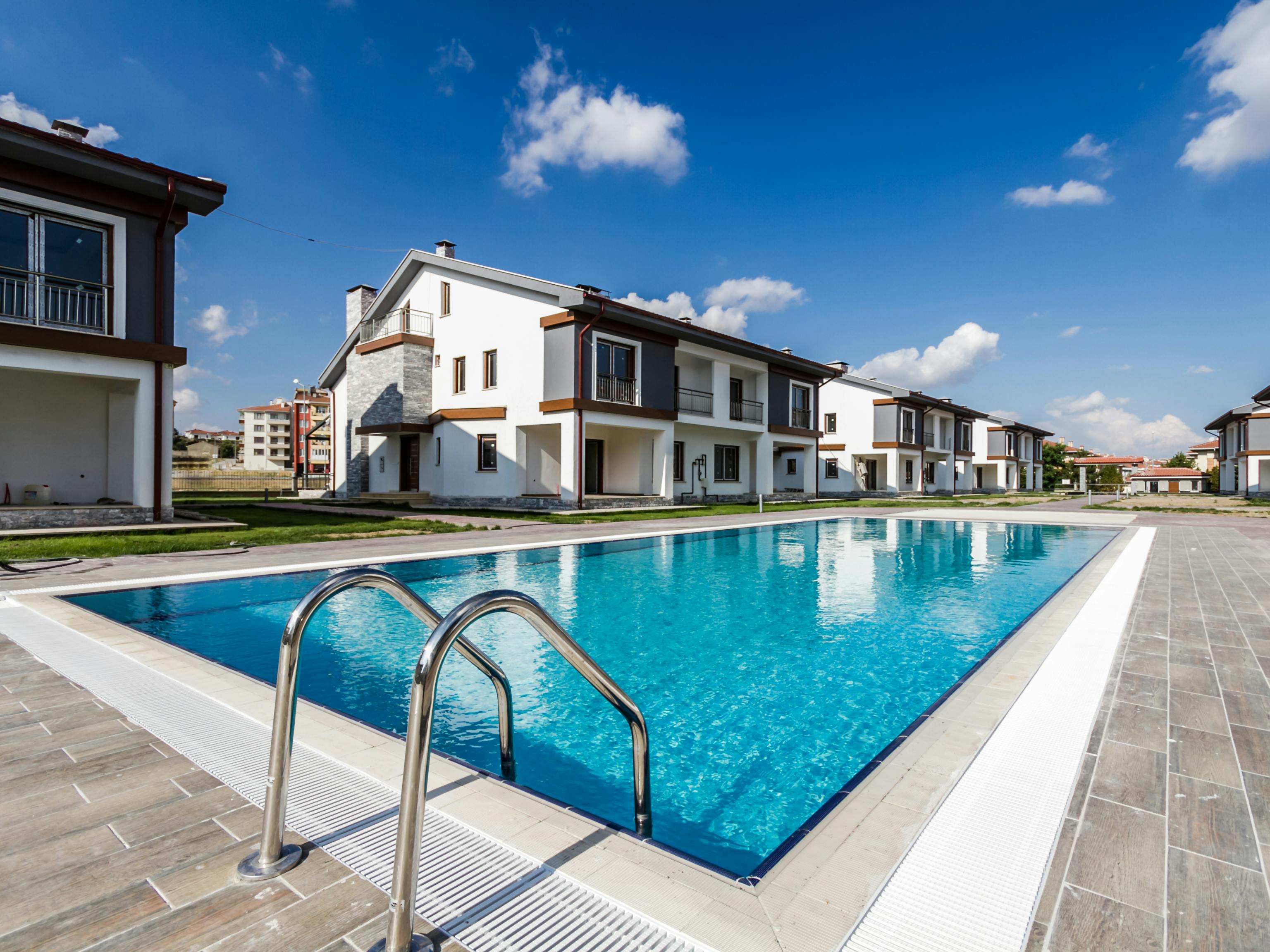
Summer in Texas arrives fast and it doesn't wait for you to be ready. One week you're running the heater on a cool April evening and the next week it's 95 degrees and everyone wants to swim. If your pool has been sitting through the cooler months without regular use, opening it the right way — testing the water, inspecting the equipment, cleaning the surfaces, and balancing the chemistry — is what separates a pool that's swim-ready in a day or two from one that spends the first two weeks of summer green, cloudy, and out of commission.
This guide walks Texas homeowners through every step of opening a pool for summer — what to check, what to clean, what to test, and what order to do it all in so nothing gets missed and your pool is ready to swim in as quickly as possible.
Texas pools don't close the way pools in northern states do. There's no antifreeze, no full winterization, no cover pulled tight over a drained pool. Most Texas pools stay filled year-round and simply run on reduced schedules through the cooler months. But reduced service, lower chemical demand in winter, and months of sitting in varying temperatures still means your pool needs a proper opening process before it's ready for peak summer use.
Getting the opening process right matters for several reasons:
Chemistry shifts during cooler months. Even a well-maintained pool goes through chemistry changes over winter and early spring. Calcium can scale up, cyanuric acid can drift, and alkalinity can shift — all of which need to be addressed before heavy summer use begins.
Equipment needs inspection after reduced use. Pumps, heaters, filters, and automation systems that have been running on minimal schedules may have developed issues that only become apparent when you ramp back up to full summer operation. Finding these problems at pool opening — not in the middle of July when every pool service company in Texas is fully booked — is the smart approach.
Algae season starts early in Texas. By April in Houston, San Antonio, and Corpus Christi, water temperatures are already warm enough for algae to thrive. Opening your pool with unbalanced chemistry or inadequate chlorine heading into spring is an invitation for the algae bloom that ruins the first weeks of swim season.
A clean opening sets the tone for the whole season. Pools that are properly opened and balanced in spring stay easier to maintain all summer. Pools that start the season behind — with chemistry already off, surfaces already dirty, or equipment already struggling — spend the whole season playing catch-up.
If your Texas pool uses a cover during cooler months, removing and cleaning it properly is the first step in opening your pool for summer.
Before pulling the cover off, remove any standing water, leaves, and debris from the surface. Pulling a cover loaded with dirty water directly into the pool defeats the purpose of having one — all that contaminated water goes straight into your pool and immediately throws off your chemistry.
Once the cover is off, rinse it thoroughly, allow it to dry completely, and store it properly for the season. A clean, dry cover stored correctly will last significantly longer than one folded up wet and thrown in a corner of the garage.
If your pool doesn't use a cover — which is common in Texas — skip to Step 2, but expect more debris accumulation and potentially more chemistry correction needed at opening.
With the cover off, take a thorough look at your pool's surfaces — walls, floor, steps, and waterline tile. After months of reduced service, you're likely to find:
Waterline scale and staining. Calcium and mineral deposits accumulate along the waterline during periods of reduced maintenance. Address this with a tile brush and appropriate tile cleaner before you start adjusting chemistry — it's much easier to clean waterline deposits before the pool is fully balanced and in active use.
Algae on walls and floor. Even a pool that looks okay from a distance may have early algae growth on the walls, in corners, or on the steps. Brush the entire pool surface thoroughly before adding any opening chemicals — brushing dislodges algae and debris and makes your shock treatment dramatically more effective.
Debris on the pool floor. Leaves, insects, and sediment that accumulated over winter and early spring need to be vacuumed before you open for summer. Vacuuming to waste — bypassing the filter and sending debris directly out — is the most efficient approach when there's significant debris on the floor, as it avoids clogging the filter during the opening process.
Before you fire everything up to full summer operation, inspect every piece of equipment in your pool system. This is one of the most important steps in opening your pool properly — catching equipment problems now saves you from emergency repairs during peak season.
Pump inspection. Check the pump for any signs of leaks at the housing, verify the basket is clean and undamaged, and listen to the motor when it first starts. Grinding, screeching, or rattling sounds when opening the pool mean a repair is needed before summer begins.
Filter inspection. For sand filters, check the pressure gauge and inspect the multiport valve for proper operation. For cartridge filters, remove and inspect the cartridge — if it's been sitting since last season, it likely needs a thorough chemical cleaning or replacement before opening. For DE filters, inspect the grids for tears or damage and recharge with fresh DE after opening.
Heater inspection. Fire up the heater and verify it reaches temperature properly. Check for error codes, listen for unusual sounds, and inspect visible connections for corrosion or wear. Heater issues caught at pool opening are far easier to schedule for repair than those discovered when you need the heater most.
Automation and timer systems. Verify that your automation system or timers are programmed correctly for summer schedules. Pump run times that worked for winter operation are almost certainly too short for peak summer use — adjust to 8–12 hours daily before the season gets underway.
Skimmer and return fittings. Check all skimmer weirs, baskets, and lids for cracks or damage. Inspect return jet fittings for any looseness or deterioration. These small components take wear over time and pool opening is the right moment to identify ones that need replacement.
Water testing is the foundation of properly opening your pool for summer. Before adding any chemicals, you need accurate baseline readings for every parameter — adding chemicals to water you haven't tested is guesswork that often makes imbalances worse rather than better.
Test for all of the following when opening your pool:
Free chlorine. After a winter of reduced service, chlorine levels are often low at pool opening. This is expected — you'll be addressing it with shock treatment in a later step.
pH. pH is almost always off at pool opening. Rainwater, organic debris, and reduced chemical management over cooler months all push pH in various directions. Getting pH into the 7.2–7.4 range before adding shock is critical — shock treatment is dramatically more effective at proper pH.
Total alkalinity. Alkalinity buffers pH and needs to be in range — 80–120 ppm — before you can effectively stabilize any other chemistry parameter at pool opening. Address alkalinity before pH if both are off.
Calcium hardness. Texas tap water tends to be hard, and calcium often climbs during periods of reduced water circulation. High calcium at pool opening can leave scale on surfaces and equipment if not addressed. Ideal range is 200–400 ppm.
Cyanuric acid. Stabilizer can deplete over the cooler months or become diluted by rain. Opening your pool for a Texas summer without adequate cyanuric acid — 30–50 ppm — means chlorine will burn off rapidly in the intense UV exposure, making it nearly impossible to maintain adequate sanitization.
Total dissolved solids. If your pool has been running for several years without a partial drain, TDS may be elevated at pool opening. High TDS reduces the effectiveness of all chemical treatments and contributes to dull, hazy water that won't clear no matter what you add.
Water chemistry adjustments at pool opening need to happen in a specific sequence. Getting the order right makes each adjustment more effective and prevents you from chasing your numbers in circles.
The correct order for balancing pool chemistry at opening:
After shocking at pool opening, keep the pump and filter running continuously for at least 24–48 hours. This circulates the shock treatment throughout the entire pool volume, filters out dead algae and debris loosened by brushing, and brings the water to a state of full circulation before you reduce to normal daily run times.
Check and clean the filter every 8–12 hours during this continuous run period at opening — the filter will capture significant debris during this phase and a clogged filter bypasses filtration entirely.
After 24–48 hours of continuous filtration following your opening shock treatment, test the water again. Chlorine levels will likely be elevated right after shocking — wait until free chlorine drops back into the 1–3 ppm range before swimming.
Verify that pH, alkalinity, and all other parameters have held in range after the opening treatment. Make any final adjustments needed, give the pool a final brush and vacuum pass, and your pool is ready for summer.
Opening a pool for summer is manageable for experienced, hands-on homeowners who are comfortable with water chemistry and equipment inspection. But there are situations where professional pool opening service is the better choice:
Your pool has been neglected through the cooler months. If your pool didn't receive regular service over winter and spring, opening it yourself means dealing with significant chemistry correction, potential algae treatment, and equipment issues simultaneously. A professional opening service handles all of it efficiently.
You're not confident in your equipment inspection skills. Identifying early signs of pump wear, filter problems, or heater issues requires experience. If equipment inspection isn't something you're comfortable with, a professional pool opening ensures nothing gets missed.
The pool is green or visibly dirty at opening. If your pool has developed algae growth or significant debris accumulation over the cooler months, professional opening service that includes algae treatment and thorough cleaning gets you swim-ready faster and more reliably than DIY recovery.
You want to start the season with documented chemistry. A professional pool opening from CK Pools includes a full water chemistry report — giving you a documented baseline for the season that makes ongoing maintenance easier to manage.

Every pool opening service includes complete surface cleaning, full equipment inspection, comprehensive water testing, chemical balancing, opening shock treatment, and a detailed service report — everything your pool needs to start the season right.
Ready to open your pool for summer? Request your free pool opening quote at ckpools.com/contact and let CK Pools get your pool swim-ready before the heat hits.