


How Much Does Pool Resurfacing Cost in Houston, TX?
.webp)
A worn, stained, rough, or outdated pool surface can make an otherwise attractive backyard feel neglected. Resurfacing gives the interior a fresh finish while addressing surface deterioration before it becomes a larger problem.
For Houston homeowners, one of the first questions is usually simple: how much does pool resurfacing cost in Houston?
For many residential concrete or gunite pools, homeowners can use a broad planning range of roughly $6,000 to $15,000 for resurfacing. Some straightforward replastering projects may fall toward the lower end, while pebble finishes, extensive repairs, larger pools, custom colors, tile work, or other upgrades can move the project higher.
The exact pool resurfacing cost depends on much more than pool length and width. Surface area, existing damage, finish material, preparation work, accessibility, water features, steps, benches, tile, and additional remodeling work can all affect the final estimate.
CK Pools provides professional pool remodeling and resurfacing services for Houston homeowners who want to restore an aging pool or update its appearance. With more than 37 years of hands-on pool industry experience, the team can evaluate the existing surface and recommend options based on the actual condition of the pool.
What Is the Average Pool Resurfacing Cost in Houston?
There is no universal price that applies to every Houston pool.
A useful starting point for a standard residential concrete or gunite pool is approximately:
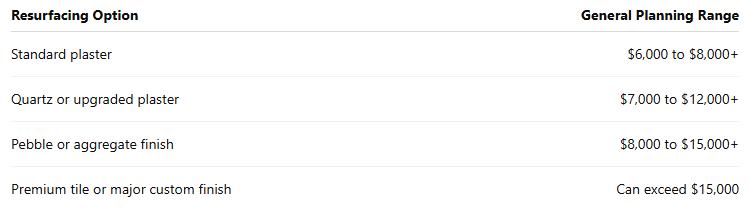
These figures should be treated as budgeting guidance, not as a CK Pools quote. A small pool in good structural condition may cost less, while a large pool needing crack repair, tile replacement, plumbing work, or extensive surface preparation can cost considerably more.
The most accurate way to determine pool resurfacing cost in Houston is to have the pool inspected and the project priced around its actual measurements, condition, and selected finish.
Houston homeowners can contact CK Pools for a pool remodeling estimate before deciding which resurfacing option fits their goals and budget.
What Affects the Cost of Resurfacing a Pool?
Two similar-looking pools can receive very different estimates. Resurfacing involves more than applying a new finish over the old one.
Several factors determine the cost of resurfacing a pool.
Pool Size and Interior Surface Area
Larger pools require more material and more labor.
The contractor is not pricing only the visible length and width of the pool. Steps, tanning ledges, benches, raised areas, spas, walls, deep ends, and other features increase the total interior surface area.
A simple rectangular pool can therefore cost less to resurface than a similarly sized pool with multiple curves, steps, benches, and an attached spa.
Condition of the Existing Pool Surface
Surface preparation can make a major difference in the final price.
A pool with normal aging may need standard preparation before a new finish is applied. A pool with deeper cracks, hollow spots, delamination, exposed gunite, leaking areas, or deteriorated material may require additional repairs first.
Installing a new finish without correcting underlying problems can shorten the life of the resurfacing work.
If there are signs of structural or plumbing problems, CK Pools can also evaluate whether separate pool repair services should be completed as part of the project.
Resurfacing Material
Material choice is one of the biggest price factors.
Basic plaster is usually among the more affordable traditional resurfacing options. Quartz, pebble, exposed aggregate, and decorative finishes generally cost more because of material prices, application requirements, texture, appearance, and expected durability.
The best finish is not automatically the most expensive one. The right choice depends on your budget, preferred appearance, pool use, maintenance habits, and how long you plan to remain in the home.
Plaster vs. Pebble Resurfacing Price
Homeowners comparing the swimming pool resurfacing cost often narrow their choices to plaster and pebble.
Both can produce an attractive pool, but they differ in price, texture, appearance, and long-term expectations.
Plaster Pool Resurfacing
Traditional pool plaster offers a smooth, clean appearance and is commonly chosen when budget is a major consideration.
For a typical residential pool, the average cost to replaster a pool in Texas will vary by size and condition, but many homeowners should expect a project to begin in the several-thousand-dollar range and increase with surface area, preparation, colors, and repairs.
Plaster may make sense if you want:
- A classic pool appearance
- A smoother interior texture
- A lower initial investment
- A simple white or lightly colored finish
- An economical way to refresh an aging pool
Proper water chemistry is especially important after replastering because poor chemistry can contribute to staining, scaling, etching, and premature surface wear.
Pebble Pool Resurfacing
Pebble and aggregate finishes usually cost more upfront than standard plaster.
They are popular because they provide a textured, premium appearance and come in a wide range of colors and aggregate combinations.
Homeowners may choose pebble when they want:
- A more decorative pool interior
- Natural-looking colors
- Greater finish customization
- A textured appearance
- A longer-term surface upgrade
Which Option Is Better for Your Budget?
When comparing pebble vs plaster resurfacing price, plaster generally has the lower starting cost.
Pebble finishes require a higher initial investment, so homeowners should compare more than just the installation price. Appearance, expected ownership period, maintenance, desired texture, and long-term value should all be considered.
CK Pools can help homeowners compare finish options during a residential pool remodeling consultation.
How Much to Resurface a Pool Based on Size?
Pool size matters, but homeowners should be careful with online calculators that estimate price using only gallons or basic dimensions.
A 15,000-gallon pool with a simple shape may require less finishing material than another 15,000-gallon pool containing an attached spa, multiple steps, benches, curves, or a large tanning ledge.
When asking how much to resurface a pool, contractors may consider:
- Interior surface square footage
- Pool depth
- Number of steps
- Benches and ledges
- Attached spa surfaces
- Pool shape
- Existing finish
- Amount of material removal required
- Accessibility for workers and equipment
This is why an on-site evaluation usually produces a much more reliable number than a generic online estimate.
Additional Costs That Can Affect the Final Price
The base swimming pool resurfacing cost may not include every improvement a homeowner wants to complete.
Resurfacing is also a convenient time to address related issues because the pool is already being prepared for renovation.
Pool Tile Replacement
Old waterline tile can make a newly resurfaced pool still look dated.
Replacing tile during resurfacing can increase the project cost, but completing both improvements together can create a much more noticeable transformation.
Tile pricing depends on the amount of tile, material selection, design, removal requirements, and whether damaged areas need repair.
Cracks and Structural Repairs
Not every surface crack means there is a serious structural problem. However, cracks should be evaluated before they are covered with a new finish.
Repairing the underlying issue first can prevent paying for a beautiful new surface that later develops visible problems.
Leak Detection
If the pool is losing water faster than expected, investigate the cause before resurfacing.
A leak may come from plumbing, fittings, equipment, or part of the pool structure. CK Pools provides professional pool leak detection when unexplained water loss needs to be investigated.
Steps, Benches, and Decorative Features
Tanning ledges, custom steps, benches, attached spas, fountains, and decorative features increase the amount of detailed labor involved.
More detailed pools usually require more preparation and finishing time than basic rectangular pools.
Deck or Other Remodeling Upgrades
Some homeowners decide to combine resurfacing with a larger backyard update.
Possible improvements include:
- New waterline tile
- Coping replacement
- Deck improvements
- Lighting upgrades
- Equipment updates
- Water features
- Plumbing repairs
- Design changes
Combining projects increases the overall budget, but it can also prevent having to reopen or disrupt the pool area again soon afterward.
When Does a Houston Pool Need Resurfacing?
Age alone does not determine when a pool should be resurfaced.
The condition of the finish is more important.
Common Signs Your Pool Surface Is Wearing Out
Consider having the pool evaluated if you notice:
- Rough areas that are uncomfortable on feet
- Widespread staining that cleaning does not remove
- Plaster discoloration
- Pitting or surface erosion
- Flaking or peeling areas
- Visible aggregate beneath old plaster
- Cracks that continue developing
- Hollow or loose surface sections
- An outdated finish you want to replace
A cosmetic problem may only require resurfacing, while cracking or water loss may indicate that additional inspection is needed.
Can Pool Maintenance Affect Surface Life?
Yes. Consistent pool care can have a major impact on how a finish ages.
Incorrect pH, calcium hardness, sanitizer levels, alkalinity, or other water chemistry conditions can contribute to scale, staining, etching, and deterioration.
After resurfacing, follow the recommended startup process carefully. The first weeks are especially important for a fresh plaster or aggregate surface.
Long-term professional pool maintenance can also help homeowners maintain balanced water and identify changes before they develop into more expensive problems.
Is Pool Resurfacing Worth the Cost?
Resurfacing can be worthwhile when the existing surface has become worn, rough, stained, or unattractive but the pool itself remains worth keeping.
A new surface can:
- Improve the appearance of the entire backyard
- Make the pool interior feel cleaner and smoother
- Address deteriorated surface material
- Allow homeowners to change the finish color
- Modernize an older swimming pool
- Support a larger pool renovation project
However, resurfacing should solve the correct problem.
If the main issue is leaking plumbing, failed equipment, structural movement, or another mechanical concern, those problems may need attention in addition to the interior finish.
How to Get an Accurate Pool Resurfacing Quote in Houston
If you want an accurate answer instead of an online average, prepare a few details before requesting an estimate.
Tell the Contractor About Existing Problems
Mention stains, cracks, rough areas, water loss, previous repairs, or anything else unusual.
Photos can be helpful, but an on-site evaluation may still be needed.
Decide What Type of Finish You Prefer
You do not need to select an exact product before contacting a contractor, but knowing whether you prefer plaster, quartz, pebble, or a premium finish makes budgeting easier.
Ask What the Estimate Includes
A resurfacing estimate should make the project scope clear.
Ask whether the quoted price includes:
- Draining
- Surface preparation
- Removal of old material
- Minor repairs
- New finish application
- Startup procedures
- Water chemistry guidance
- Cleanup
- Additional tile or repair work
Clear scope makes it easier to compare quotes fairly.
Why Houston Homeowners Choose CK Pools
CK Pools is a family-owned Texas pool company with more than 37 years of hands-on industry experience. The company provides pool cleaning, maintenance, repairs, leak detection, and residential remodeling services across Houston and other Texas markets.
Houston homeowners can learn more about available services through the CK Pools Houston service area.
Homeowners researching a contractor can also review CK Pools customer reviews on Google to see feedback from customers who have worked with the company.
For resurfacing, replastering, repairs, or a larger renovation, CK Pools evaluates the pool before recommending the appropriate next step.
Frequently Asked Questions About Pool Resurfacing Cost in Houston
How Much Does Pool Resurfacing Cost in Houston?
Pool resurfacing cost in Houston commonly falls somewhere around $6,000 to $15,000 for many residential projects, although smaller or simpler jobs may cost less and premium finishes or extensive repairs can cost more.
Pool size, surface condition, finish selection, preparation, access, tile work, and repairs determine the actual price.
How Much Does Pool Resurfacing Cost in Houston for a Standard Plaster Finish?
Standard plaster is generally one of the more affordable traditional resurfacing options. A typical residential replastering project may fall around $6,000 to $8,000 or more depending on pool size and preparation requirements.
An inspection is needed for an accurate quote.
What Is the Average Cost to Replaster a Pool in Texas?
The average cost to replaster a pool in Texas varies considerably by location, size, pool condition, and finish. Many standard residential projects fall within several thousand dollars, with roughly $6,000 to $8,000 being a useful planning range for many pools.
Larger or damaged pools can cost more.
How Much Does Pebble Pool Resurfacing Cost?
Pebble or aggregate finishes usually cost more than standard plaster. Many homeowners can expect pebble resurfacing to fall closer to the upper portion of the typical $6,000 to $15,000 resurfacing range.
The exact price depends on the aggregate product, pool size, preparation, and project complexity.
How Long Does Pool Resurfacing Take?
Many resurfacing projects require several days for draining, preparation, repairs, finish application, curing, refilling, and startup.
The timeline can change based on weather, pool condition, material selection, and the amount of repair work required.
Can I Resurface a Pool Without Replacing the Tile?
Yes. If the existing waterline tile is secure and in good condition, it may be possible to resurface the pool without replacing it.
However, many homeowners update the tile at the same time so the finished pool has a more complete, modern appearance.
How Do I Get a Pool Resurfacing Estimate From CK Pools?
Start by requesting an evaluation through the CK Pools contact page. Provide the pool location, approximate size, current surface condition, and any remodeling ideas you are considering.
An evaluation can determine which surface options fit the pool and provide a more useful estimate than a generic online pool resurfacing cost calculator.
Get a Pool Resurfacing Quote for Your Houston Home
So, how much does pool resurfacing cost in Houston? For budgeting purposes, many homeowners can begin with a general range of about $6,000 to $15,000, but the actual answer depends on the pool in your backyard.
Standard plaster can keep the initial investment lower, while pebble, quartz, decorative finishes, repairs, tile upgrades, and complex designs can raise the total cost of resurfacing a pool.
The most useful next step is an inspection based on the actual surface condition and your renovation goals.
If your pool is rough, stained, aging, cracked, or simply ready for a new look, request a pool resurfacing and remodeling quote from CK Pools. The team can help you understand your options, compare finishes, and plan a renovation that fits your Houston pool and budget.


